





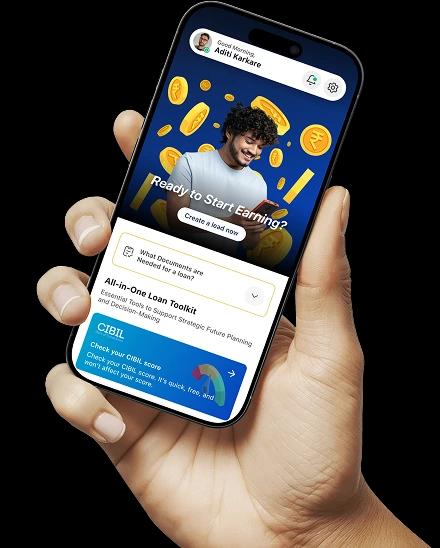


Check your CIBIL Score
for Free

Checking won’t impact your score

Detailed report with downloadable PDF

100% free & secure process

Get tips to improve your score
Checking won’t impact your score
Detailed report with downloadable PDF
100% free & secure process
Get tips to improve your score
Understanding CIBIL Score for Financial Health
A CIBIL score is a 3-digit numeric summary of your credit history and credit behavior. It ranges from 300 to 900 and is used by banks and financial institutions to determine your creditworthiness. A higher score reflects responsible repayment habits and increases your chances of getting loans or credit cards approved at favorable terms.
How is CIBIL Score Calculated?
CIBIL calculates your score using information reported by banks and lenders. The score is based on:
1. Repayment history: Timely payments of EMIs and credit card bills.
2. Credit mix: Balanced usage of secured (home/auto loan) and unsecured (personal loan/credit card) credit.
3. Credit utilization ratio: Lower usage of available credit reflects better financial discipline.
4. Credit inquiries: Too many loan or card applications within a short period negatively impact your score.
For example, if you consistently pay EMIs on time and keep your credit card usage below 30% of the limit, your score can improve steadily over time.
Why CIBIL Score Matters
• For loan approvals: Banks check your score before sanctioning loans to assess repayment capability.
• For interest rates: Higher scores often qualify you for lower interest rates on loans.
• For credit cards: A good score increases your chances of getting premium credit cards with better benefits.
• For financial planning: Knowing your CIBIL score helps you improve weak areas and maintain healthy financial habits.
What is a CIBIL Score?
CIBIL score is a 3-digit number ranging from 300 to 900 that represents your credit history and repayment behavior. A score closer to 900 is considered excellent.
Why is the CIBIL Score Important?
Banks and lenders use your CIBIL score to evaluate your loan or credit card application. A higher score improves approval chances and better loan terms.
What is a Good CIBIL Score Range?
A score above 750 is generally considered good. It indicates responsible credit management and increases your chances of getting loans with lower interest rates.
How Can I Improve My CIBIL Score?
Pay EMIs and credit card bills on time, maintain a low credit utilization ratio, avoid frequent loan applications, and maintain a healthy mix of secured and unsecured credit.
Does Checking My CIBIL Score Frequently Lower It?
No, checking your own CIBIL score is a soft inquiry and does not affect your score. However, multiple loan applications (hard inquiries) within a short period can reduce it.
How Often is the CIBIL Score Updated?
Your score is updated every 30 to 45 days, depending on how frequently banks and lenders report your credit activity to CIBIL.
Explore our other Tools
RERA Search
Access detailed information about real estate projects registered under the Real Estate Regulatory Authority (RERA).
SIP Calculator
Systematic Investment Plan calculator tool helps investors estimate the potential returns of their SIP investments over a specified period.
Stamp Duty Calculator
Estimate the stamp duty charges for property transactions based on location, property value, and other factors.
Circle Rate Calculator
Quickly calculate the circle rate, ensuring compliance with local regulations and making informed real estate decisions.
Loan Balance Transfer
Systematic Investment Plan calculator tool helps investors estimate the potential returns of their SIP investments over a specified period.
Home Loan EMI
Stamp duty and registration charges are crucial taxes that a homebuyer must pay to city authorities to register a property under their name. Various state governments impose different rates for these stamp duties and registration fees.


Ask Pulse Ai anything about real estate

Unlock the Latest in Real Estate
News, Infographics, Blogs & More! Delivered to your inbox.